
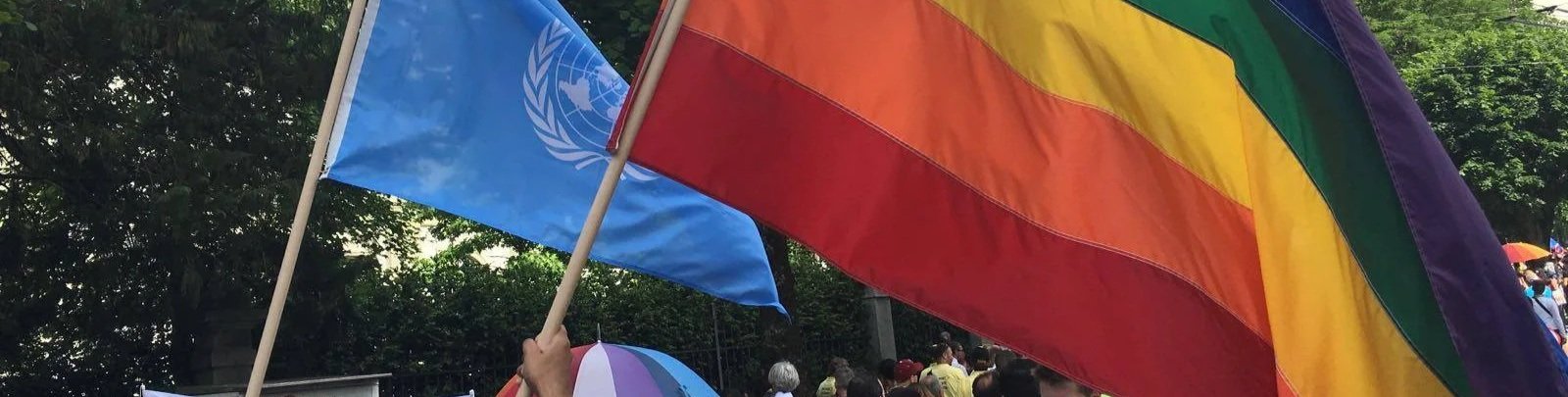
Advocating for the equality and non-discrimination of LGBTIQ+ personnel in the UN system and its peacekeeping operations
Attitudes take time to change.
Policy changes can take even longer.
What is important is that we change the conversation. When we open people’s minds; when we illuminate a problem where they thought there was none before; when we help administrators see that UN policies and systems cater to heterosexuality and the gender binary, and not to diversity amongst UN personnel; we have taken a big step forward and are closer to our goals of equality and inclusion.
UN-GLOBE is an all-volunteer association with a Board, a wide network of duty station and entity-based Coordinators, and thousands of members around the world. Together, we strive to bring equality and inclusion to UN policies and duty stations, and to ensure that LGBTIQ+ personnel, LGBTIQ+ dependents, and all UN staff and their families can carry out their work with the support they need and the dignity they deserve. The UN system rarely changes overnight, but we are dedicated to advocating for our causes until changes do come.
In a rapidly transforming UN, our work is as critical as ever. We invite you to learn more.
Explore UN-GLOBE’s 2026 priorities below. We also welcome you to read our 2025 annual report, learn about the people who make up UN-GLOBE, join our membership or mailing list, support our work, and access our collection of resources.
2026 UN-GLOBE Priorities

Bias & Discrimination-free UN workplaces
-
To promote the elimination of bias, discrimination and inequities, and ensure the UN workplace is free from homophobia, biphobia and transphobia, UN-GLOBE advocates for positive and supportive messaging from leadership; awareness raising campaigns; practical and operational training for personnel and administrators; close review of workplace premises, guidelines, and cultures; swift responses to incidents of discrimination and abuse; updates to HR and recruitment systems; the protection of LGBTIQ+ personnel data; and necessary policy changes.
-
DescriptiTo promote the elimination of bias, discrimination and inequities, and ensure the UN workplace is free from homophobia, biphobia and transphobia, UN-GLOBE advocates for positive and supportive messaging from leadership; awareness raising campaigns; practical and operational training for personnel and administrators; close review of workplace premises, guidelines, and cultures; swift responses to incidents of discrimination and abuse; updates to HR and recruitment systems; the protection of LGBTIQ+ personnel data; and necessary policy changes. on text goes here
-
In 2026, UN-GLOBE is releasing critical new guidance on inclusive health insurance coverage for transgender, non-binary, and gender-diverse personnel and will be offering related training for HR teams. We advocate for inclusive health care that includes equitable insurance addressing the needs of LGBTIQ+ people, including in relation to gender-affirming care and reproductive support. We want every UN personnel in every duty station to be able to access dignified health care and necessary medications without stigma or the potential for harm.
-
In 2026, we are also revamping and re-releasing our guidance on workplace inclusion for transgender, non-binary and gender diverse personnel aimed at workplace leadership, administrators, and HR personnel and releasing a UN-GLOBE training module on SOGIESC workplace basics for UN personnel.
-
UN-GLOBE continues to advocate for a survey to measure the satisfaction of LGBTIQ+ personnel in the UN system, and to measure attitudes towards LGBTIQ+ issues. Having hard numbers can benefit us all, personnel and administrators alike. While discussions about a system-wide survey continue, we are working with UN-GLOBE chapters at the entity and duty stations levels to initiate local and entity-wide surveys or add LGBTIQ+-specific questions to existing surveys.

Safe, Equal & Dignified duty stations
-
UN-GLOBE calls for the UN system to ensure that all LGBTIQ+ personnel are able to access the same levels of safety, equality and dignity in UN-classified duty stations as other personnel, or to revamp the duty station classification system so that it truly represents all UN personnel and their families, not just some.
The UN is long overdue in revising its classification of family duty stations to reflect the reality that there are many “family” duty stations in which personnel are unable to obtain the necessary visas and residency permits for their spouses, and in which it is unsafe for same-gender couples or LGBTIQ+ dependents to live. To mitigate the current issues with family installation and the reality that for many LGBTIQ+ personnel, family duty stations are de facto hardship duty stations, UN-GLOBE urges all UN entities to adopt administrative measures to compensate such personnel accordingly, examples of which are already in place in several large UN agencies.
-
UN-GLOBE also urges UN offices to recognize the lack of dignity and security afforded to LGBTIQ+ personnel and their families when they are forced to hide their identities, ask their children to lie about their family structures, or continually host their families on temporary visas in “family” duty stations. These circumstances are not only demoralizing, stressful, and damaging to health, but can result in the loss of experienced personnel from the UN system or impede the family-building plans of personnel.
Equitable Mobilty & career opportunities
-
Description text goes here
-
UN-GLOBE strongly believes that the UN benefits from the full range of diversity being represented in its personnel, that the essential and often lifesaving work being performed the UN system is greatly enriched by the contributions of LGBTIQ+ personnel at all levels and in all areas of expertise, and that the current approach to mobility - which privileges heterosexual and cisgender personnel, their lived experiences, and their family structures - can negatively impact the diversity of UN teams.
In the context of UN80, multiple decentralization exercises ongoing in various UN entities, including to duty stations that are not family-friendly for same-gender spouses, and the release of new mobility policies in the UN Secretariat and several UN agencies, UN-GLOBE continues to call for a fair mobility process that fully recognizes some LGBTIQ+ personnel will have concerns about their ability to move to certain duty stations - typically due to family unity, safety and security, or essential healthcare access.
In sum, we believe the UN should recognize the concerns and the barriers that exist with the current duty station classification system and mobility processes, and take steps to support personnel and mitigate harm during mobility. UN-GLOBE actively advocates to UN entities to support them in this process through reviewing their policies and procedures and making recommendations that take into account the needs of the organization and of its personnel.